
Flooding in Ashburn, VA can happen faster than most property owners expect. A frozen pipe bursts during a Loudoun County winter. A heavy storm overwhelms drainage systems in Sterling. A sump pump fails in a finished basement in Leesburg. Within minutes, water moves beneath hardwood floors, into drywall, and behind cabinetry.
Northern Virginia properties range from large single-family homes in Great Falls to townhomes in Chantilly and commercial buildings near Dulles. Each structure responds differently to moisture. Knowing what to expect after flooding allows homeowners, property managers, commercial operators, and insurance professionals to move forward with clarity. Here is how the water damage restoration process works and how Rytech Restoration of Northern Virginia leads recovery across Loudoun, Fairfax, and Clarke Counties.
Prioritizing Safety After Water Intrusion
When water enters a property, safety comes first. Standing water can conceal energized wiring, unstable flooring, or weakened ceiling materials.
If safe to do so, turn off electricity to affected areas at the breaker panel. Shut off gas lines if appliances were exposed. Avoid stepping onto saturated hardwood or laminate flooring, especially in finished basements common throughout Ashburn and Centreville. In colder months, frozen pipe breaks may continue leaking until the main supply is closed.
Wearing gloves, rubber boots, and a protective mask reduces exposure while waiting for professional help. Limiting access protects both occupants and the structure.
A Thorough Water Damage Assessment in Loudoun County
When our team arrives, we follow the ANSI/IICRC S500 Standard for Professional Water Damage Restoration. This standard outlines how water losses are inspected, categorized, documented, and dried.
Water rarely stays in one place. It migrates through insulation, framing, subfloors, and wall cavities. Using professional moisture meters and infrared thermal imaging, we detect hidden moisture behind walls and beneath flooring systems.
Northern Virginia’s seasonal humidity changes can create misleading surface dryness. Materials may feel dry to the touch while retaining moisture internally. A data-driven inspection ensures the drying plan addresses the full extent of the damage.
Understanding Water Categories and Risk Levels
Water damage falls into three categories based on contamination.
Clean water typically comes from broken supply lines or roof leaks. Gray water may originate from appliances such as washing machines or dishwashers. Black water includes sewage backups or floodwater entering from outside sources, a concern in low-lying areas or properties near creeks and stormwater systems.
Water conditions change over time. Clean water left untreated will become more contaminated. Rapid response reduces health concerns and protects building materials from deeper deterioration.
24/7 Emergency Water Damage Restoration in Ashburn
Flooding does not follow a schedule. A commercial pipe can rupture overnight in Dulles. A townhouse in Round Hill can flood during a holiday weekend storm.
Rytech Restoration of Northern Virginia provides 24/7 emergency response because immediate mitigation will reduce structural damage and shorten drying time. During the first call, we gather information about the source, timeline, and safety concerns. Our IICRC-certified technicians arrive equipped with commercial extraction equipment and advanced drying systems.
If you are searching for trusted water damage restoration company in Northern Virginia, our team combines local expertise with national standards and decades of restoration leadership.
Water Extraction and Controlled Structural Drying
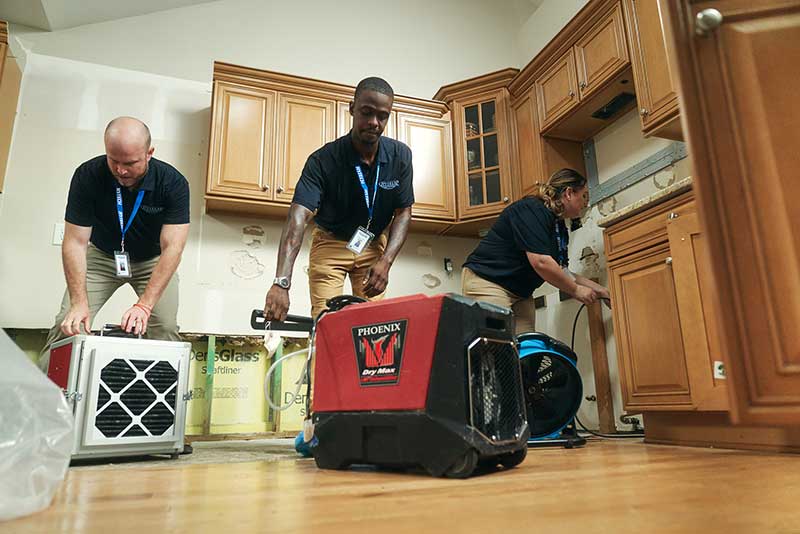
Standing water must be removed quickly to protect subfloors, drywall, and framing. Commercial-grade extraction equipment eliminates bulk water from carpet, hardwood, and tile surfaces.
Drying is a controlled scientific process. The S500 standard explains how airflow, temperature, and humidity must be managed together. Air movers increase evaporation from wet surfaces. Dehumidifiers remove moisture from the air to prevent it from reabsorbing into materials.
Daily moisture readings guide equipment placement and adjustments. This data-driven approach restores materials to appropriate moisture levels and reduces the likelihood of microbial growth.
Mold Prevention and Professional Remediation

Moisture trapped inside wall cavities or beneath flooring creates an environment where mold can develop. Even in Northern Virginia’s moderate climate, enclosed spaces retain humidity long after surface water is removed.
The ANSI/IICRC S520 Standard for Professional Mold Remediation governs containment and removal procedures. When mold is present, we establish containment barriers and use HEPA filtration to reduce airborne spore movement. Materials beyond restoration are removed carefully, and affected structural components are cleaned to reduce mold spore levels to normal indoor conditions.
“We serve everything from newer homes in Ashburn to established properties in Leesburg and commercial buildings throughout Loudoun and Fairfax Counties. After years working with finished basements, hardwood flooring, and modern insulation systems common in this region, we understand how quickly hidden moisture can compromise structural materials. Fast extraction and controlled drying protect those materials before larger problems develop.”
Shah Wali, Owner, Rytech Restoration of Northern Virginia
Structural Inspection and Informed Material Decisions
Water affects materials differently depending on exposure time and construction type. Hardwood may cup or warp. Drywall can lose structural strength. Insulation often traps moisture and slows drying.
We inspect floors, ceilings, wall cavities, and foundations using moisture meters and infrared imaging. Decisions are based on measurable data rather than surface appearance. Materials that can be restored are dried in place whenever possible. Materials beyond structural integrity are removed carefully and documented.
Preserving materials when feasible minimizes disruption and protects long-term property value.
Salvaging Residential and Commercial Contents
Flooding impacts more than structural components. Furniture, electronics, important documents, and commercial inventory often require specialized care.
Our team separates contents into restorable and non-restorable categories. Restorable items are cleaned and disinfected using professional techniques. For commercial properties in Sterling, Chantilly, or Great Falls, packout services allow business operations to continue while mitigation progresses.
Protecting contents reduces financial loss and shortens recovery timelines.
Insurance Documentation and Clear Communication
Many property owners only navigate the insurance process after experiencing a loss. Organized documentation simplifies communication between property owners, adjusters, and carriers.
We photograph affected areas, record moisture readings, and prepare detailed reports aligned with IICRC standards. Accurate documentation supports transparent claim evaluation. Insurance professionals value structured data and measurable results.
Having a knowledgeable restoration partner provides clarity throughout the claim process.
Cleaning and Sanitizing the Affected Space
After structural drying is complete, cleaning begins. Surfaces exposed to contaminated water are treated with EPA-approved disinfectants according to manufacturer instructions.
Porous materials beyond restoration are removed. Remaining structural components are cleaned thoroughly to reduce bacteria, residues, and odors. This step prepares the space for safe occupancy and reconstruction.
Across Loudoun, Fairfax, and Clarke Counties, thorough sanitation restores confidence in indoor environments.
Coordinating the Reconstruction Phase
Once mitigation and cleaning are complete, the property transitions into reconstruction. Utilities and insulation are prioritized to restore functionality quickly.
Rytech specializes in mitigation and restoration rather than replacement services, yet we coordinate closely with licensed contractors to support full structural recovery. Clear communication ensures a seamless transition between phases.
Preventing Future Flooding in Northern Virginia
Proactive steps reduce repeat losses. Installing sump pumps in finished basements protects homes during heavy rainfall. Insulating pipes reduces freeze-related bursts during winter. Maintaining gutters and downspouts improves drainage around foundations.
Proper grading directs water away from structures. Routine plumbing inspections identify aging supply lines before failure.
Cost Considerations and Budget Planning
Restoration costs depend on measurable variables: affected square footage, water category, exposure duration, and material types.
A small appliance leak in Ashburn differs significantly from widespread basement flooding in Leesburg. Transparent estimates allow property owners and managers to plan responsibly and make informed decisions.
Clear documentation supports financial clarity.
Restoration Timeline and Project Phases
Most projects move through defined stages: emergency response, mitigation, structural drying, cleaning, and coordination for reconstruction. Drying often requires several days depending on saturation levels and environmental conditions.
Large commercial properties or prolonged exposure extend timelines. Ongoing monitoring and communication keep all stakeholders informed throughout the process.
Measured progress produces reliable outcomes.
Choosing a Certified Restoration Company in Northern Virginia

Selecting a restoration company requires attention to credentials and experience. IICRC-certified technicians follow recognized standards such as S500 and S520. Local knowledge of Ashburn, Sterling, Leesburg, and surrounding communities adds practical insight into common building materials and regional weather patterns.
Rytech Restoration of Northern Virginia delivers rapid response, advanced drying technology, detailed documentation, and a customer-focused approach. We prioritize restoring materials whenever possible and remove only what cannot be salvaged.
If flooding has impacted your home or commercial property in Ashburn or anywhere in Loudoun County, immediate action will protect your structure and contents.
FAQs: Answering Your Pressing Water Damage Restoration Questions
At Rytech Northern Virginia, we understand how stressful water damage can be. That’s why we’ve created a helpful FAQ section to walk you through the entire restoration process. From what to expect during each phase to how we handle cleanup and communication, our answers are designed to provide clarity and confidence—so you feel supported every step of the way as we restore your home or business.


