
Water damage can happen at any hour, often when you least expect it. A burst pipe during winter, a failed water heater, heavy rain, or an overflowing appliance can quickly affect your home or business. Throughout Ashburn and Loudoun County, property owners also experience water damage from severe thunderstorms, frozen plumbing during cold snaps, roof leaks, and unexpected mechanical failures. The first several hours after discovering water damage often determine how much of the property can be successfully restored and how quickly normal operations can resume.
Understanding how emergency water damage restoration works helps remove uncertainty during an already stressful event. Whether you own a home in Ashburn, manage commercial property in Sterling, oversee office space near Dulles, or maintain rental properties throughout Loudoun or Fairfax County, knowing what happens next allows you to make informed decisions with confidence.
At Rytech Restoration of Northern Virginia, we believe informed property owners make better decisions during emergencies. This guide explains how professional emergency water damage restoration works, why rapid structural drying matters, and how science-based restoration methods help protect homes and businesses throughout Northern Virginia.
Understanding Water Damage in Ashburn and Loudoun County
Emergency water damage occurs when unwanted water enters a structure quickly enough to threaten building materials, contents, or indoor environmental conditions. Unlike slow plumbing leaks that develop over several months, emergency losses often require immediate action to reduce additional damage.
Throughout Ashburn, Sterling, Leesburg, Chantilly, Centreville, and surrounding Northern Virginia communities, restoration professionals commonly respond to burst supply lines, failed water heaters, overflowing washing machines, roof leaks following severe storms, frozen pipes during winter weather, and sewer backups. Commercial buildings may also experience sprinkler system failures or water released during fire suppression efforts.
Once water enters a building, it rarely remains where it first appears. Gravity allows moisture to move beneath hardwood flooring, inside drywall, under cabinets, through insulation, and into structural framing. Even when surfaces appear dry, elevated moisture levels may remain hidden inside construction materials.
Ashburn homes often include finished basements, engineered hardwood flooring, drywall partitions, and modern insulation systems that readily absorb moisture. Office buildings, retail centers, healthcare facilities, schools, and multifamily housing introduce additional construction assemblies that require specialized moisture detection and drying strategies. Understanding how water behaves inside different building materials forms the foundation of every professional restoration project.
Common Causes of Emergency Water Damage Throughout Northern Virginia
Every water damage event begins with a source, but the causes vary considerably from one property to another.
Northern Virginia experiences all four seasons, creating a variety of water damage risks throughout the year. Winter freezes frequently cause water supply lines to burst inside exterior walls, crawl spaces, garages, and unfinished basements. Spring and summer storms can overwhelm drainage systems or damage roofing materials, allowing rainwater to enter homes and businesses.
Indoor plumbing failures remain among the most common causes of emergency restoration. Water heater failures, leaking refrigerator supply lines, broken dishwasher connections, failed washing machine hoses, overflowing tubs, and malfunctioning HVAC condensate systems can release hundreds of gallons of water before being discovered.
Some problems develop more gradually. Small roof leaks may saturate attic insulation before becoming visible on ceilings below. Hidden plumbing leaks inside walls or beneath cabinetry often remain unnoticed until flooring begins to buckle or drywall softens.
Water damage also frequently follows firefighting efforts. Although extinguishing the fire remains the highest priority, large volumes of water used during suppression activities often require immediate extraction and structural drying afterward.
Identifying and correcting the source of intrusion remains one of the first priorities before professional drying begins. Eliminating the source prevents additional water from entering the structure and allows restoration efforts to move forward effectively.
Signs That Require Immediate Attention
Some water losses leave little doubt about the need for emergency action. Others develop quietly before visible damage appears.
Standing water inside living spaces, wet carpeting, dripping ceilings, overflowing fixtures, or active plumbing leaks all require immediate evaluation. Water that remains on flooring continues migrating beneath finished surfaces where it becomes increasingly difficult to detect without specialized equipment.
Other warning signs develop gradually. Hardwood flooring may cup or separate, laminate flooring may swell along seams, drywall can soften or discolor, and paint may blister as moisture accumulates beneath the surface.
A persistent musty odor often indicates that elevated moisture has remained inside building materials long enough to affect indoor environmental conditions. While odors alone do not confirm mold growth, they frequently signal moisture conditions that deserve prompt inspection.
An unexpected increase in monthly water usage may also indicate a concealed plumbing leak affecting walls, flooring, or structural framing.
According to ANSI/IICRC S500 guidance, mold may begin developing within approximately 24 to 48 hours when moisture remains present under favorable environmental conditions. Early inspection and structural drying reduce the opportunity for elevated microbial growth to develop.
Understanding Water Categories and Classes
Every water damage project begins with an evaluation of both the contamination level of the water and the amount of structural moisture present.
Water categories describe the quality of the water involved.
Category 1 water originates from sanitary sources such as broken supply lines or overflowing sinks supplied by clean water. Although initially clean, Category 1 water may deteriorate if left untreated or exposed to contaminants.
Category 2 water contains a greater degree of contamination and may originate from washing machines, dishwashers, sump pump failures, or similar sources.
Category 3 water presents the highest contamination concerns. Sewage backups, toilet overflows involving waste, and floodwaters entering from outside commonly fall into this category and require specialized containment and safety procedures.
Water damage classes describe how extensively moisture has affected structural materials.
Class 1 involves limited moisture absorption affecting a relatively small portion of the structure.
Class 2 extends into walls, flooring, insulation, and multiple porous materials.
Class 3 typically affects ceilings, walls, insulation, and large areas where water has extensively saturated structural components.
Class 4 involves low-permeance materials such as hardwood flooring, concrete, masonry, plaster, and dense structural assemblies that require specialized drying techniques and extended monitoring.
Correct classification helps restoration professionals determine equipment needs, drying goals, and monitoring schedules throughout the project.
Why Immediate Response Makes a Difference
Water damage becomes more difficult to restore with every passing hour.
Drywall quickly absorbs moisture, wood framing begins expanding, adhesives weaken beneath flooring, insulation loses effectiveness, and finishes start deteriorating. As moisture migrates deeper into structural assemblies, additional demolition may become necessary simply to access trapped water.
Rapid stabilization often allows significantly more building materials to be successfully restored instead of removed.
Professional drying also limits elevated indoor humidity that can spread moisture into neighboring rooms and unaffected materials. Moisture rarely remains isolated to a single room. Without controlled drying, humidity moves throughout the building and affects cabinetry, furnishings, structural framing, and other porous materials.
Insurance policies generally expect reasonable action to reduce additional damage following a covered water loss. Detailed documentation, moisture readings, daily monitoring reports, and photographs provide valuable records throughout both the restoration and insurance documentation processes.
What Happens During Emergency Water Damage Restoration?
Every emergency restoration project begins with understanding the full extent of moisture before equipment is installed.
Professional technicians first perform a detailed inspection using moisture meters, thermal imaging technology, and visual assessment techniques. Moisture mapping documents where water has traveled, identifies hidden moisture, and establishes drying goals.
Standing water is then removed using commercial extraction equipment capable of recovering substantially more water than residential wet vacuums. Removing liquid water first significantly improves drying efficiency.
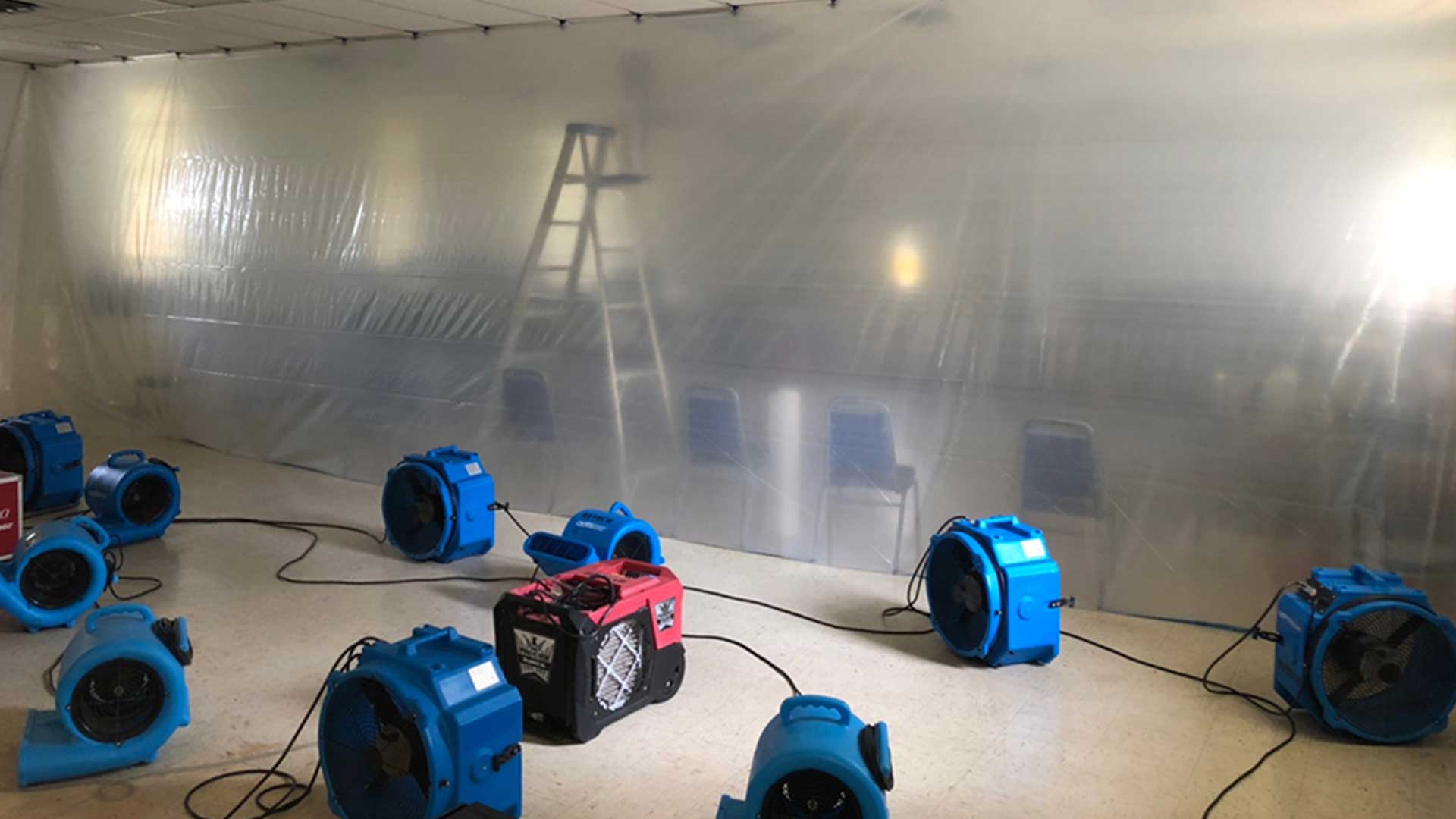
Once extraction is complete, technicians strategically position commercial air movers and industrial dehumidifiers according to scientific drying principles. Equipment placement depends on building construction, affected materials, and moisture conditions rather than simply placing fans throughout the structure.
Throughout the drying process, technicians continue measuring moisture levels inside structural materials. Equipment adjustments occur as conditions change, ensuring drying remains efficient while confirming progress toward established drying goals.
Cleaning procedures vary depending on the category of water involved. Throughout the project, detailed documentation supports communication with both property owners and insurance professionals while recording moisture conditions from beginning to completion.
Professional Water Extraction and Drying Techniques
Many property owners believe the restoration process ends once standing water disappears. In reality, extraction simply begins the structural drying process.
Commercial extraction equipment removes large volumes of liquid water before controlled evaporation begins. Air movers create directed airflow across wet materials while industrial dehumidifiers remove moisture from the surrounding air. This combination allows trapped moisture inside structural materials to evaporate and leave the building efficiently.
Professional moisture meters measure the moisture content of wood, drywall, flooring, and framing members throughout the project. Thermal imaging cameras assist technicians in locating hidden moisture behind walls, beneath flooring, and above ceilings that cannot be detected through visual inspection alone.
This scientific approach differs significantly from relying solely on household fans or portable dehumidifiers. Consumer equipment often lacks the capacity needed to dry structural assemblies effectively, particularly during larger water losses involving hidden moisture.
Drying continues until moisture measurements demonstrate that affected materials have returned toward established drying goals rather than simply appearing dry on the surface.
"Northern Virginia properties experience everything from frozen pipes during winter to severe summer storms. Every building responds differently depending on its construction, age, and the way moisture travels through the structure. Detailed inspections, accurate moisture mapping, and science-based drying allow us to develop restoration plans that protect both residential and commercial properties throughout Ashburn and Loudoun County."
Shah Wali, Owner, Rytech Restoration of Northern Virginia
Equipment Used During Professional Water Damage Restoration
The equipment used during emergency water damage restoration directly affects how efficiently a building dries. Professional restoration technicians select equipment based on the amount of water present, the construction materials involved, and ongoing moisture measurements rather than using a standard setup for every project.
Commercial air movers create controlled airflow that accelerates evaporation from wet structural materials. Industrial refrigerant and desiccant dehumidifiers remove moisture from the indoor air before it can be absorbed back into walls, flooring, or framing. Moisture meters measure the moisture content inside wood, drywall, and concrete, while infrared cameras help locate hidden moisture behind finished surfaces that would otherwise remain undetected.
When microbial contamination is present, HEPA-filtered equipment may be used within contained work areas to help reduce airborne particles during remediation. Depending on the category of water involved, restoration professionals may also apply cleaning agents and antimicrobial products following ANSI/IICRC S500 and S520 guidance. Continuous monitoring throughout the project allows technicians to adjust equipment placement as drying progresses, improving efficiency while documenting measurable results.
Mold Prevention and Remediation After Water Damage

Northern Virginia experiences humid summers, seasonal rainfall, and changing temperatures that create favorable conditions for microbial growth whenever excess moisture remains inside a building. Water damage and mold are closely connected because moisture provides the conditions necessary for mold to develop.
Professional restoration focuses on removing excess moisture before elevated microbial growth becomes established. According to ANSI/IICRC guidance, mold may begin developing within approximately 24 to 48 hours when moisture remains present. Rapid structural drying significantly reduces that opportunity.
Professional mold remediation involves much more than cleaning visible growth. Restoration specialists first identify and correct the moisture source, establish containment to reduce the movement of mold spores, remove materials that cannot be successfully restored when necessary, and carefully clean remaining structural components using industry-recognized procedures. The objective is to reduce harmful mold spores in the indoor environment while returning the property to a clean, dry condition.
Property owners throughout Ashburn, Sterling, Leesburg, Chantilly, Centreville, Great Falls, and surrounding Loudoun and Fairfax counties often benefit from professional moisture inspections even when mold is not yet visible. Hidden moisture can remain inside structural materials long after surfaces appear dry.
Health and Safety During Emergency Water Damage
Water damage creates more than inconvenience. It can also introduce serious safety concerns that require careful attention.
Electrical hazards become a priority whenever water reaches outlets, electrical panels, appliances, or wiring. Wet flooring creates slip hazards, while ceilings and structural materials weakened by prolonged moisture exposure may become unstable.
Category 2 and Category 3 water losses require additional precautions because the water may contain bacteria, sewage, chemicals, or other contaminants. These situations require specialized personal protective equipment, containment systems, and cleaning procedures designed to reduce cross-contamination throughout the property.
Restoration technicians wear gloves, eye protection, protective clothing, and respiratory protection appropriate for the conditions they encounter. Containment barriers and negative air pressure systems may also be established when microbial contamination or sewage-related water losses are involved. These procedures protect both building occupants and restoration personnel while allowing work to proceed safely.
Navigating Insurance Claims and Documentation
For many property owners, a water damage claim is an unfamiliar experience. Proper documentation from the beginning helps simplify communication throughout the restoration process.
Photographs, videos, written observations, and inventories of affected belongings create an initial record of the loss before cleanup begins whenever conditions safely allow. Restoration professionals add another level of documentation by recording moisture readings, equipment placement, drying progress, daily monitoring reports, and updated photographs throughout the project.
This detailed information supports communication between property owners, insurance adjusters, and insurance carriers. Rather than replacing the insurance process, professional documentation provides organized records that help explain how the damage was evaluated and how the drying process progressed.
Many property owners appreciate having an experienced restoration team that can explain each phase of the project while providing accurate documentation that supports the claims process.
DIY Cleanup Versus Professional Water Damage Restoration
Many homeowners naturally begin removing water immediately after discovering a leak. Taking simple steps such as shutting off the water source, protecting valuables, or removing excess standing water when safe can certainly help reduce additional damage.
However, hidden moisture frequently remains beneath flooring, inside wall cavities, beneath cabinetry, and within structural framing. Household fans and portable dehumidifiers often cannot generate the controlled drying environment necessary for larger water losses.
Professional restoration combines commercial extraction equipment, moisture mapping technology, industrial drying equipment, and continuous monitoring throughout the drying process. Instead of relying on appearance alone, technicians verify that structural materials have reached acceptable moisture levels before equipment is removed.
For commercial properties, multifamily buildings, schools, healthcare facilities, and office environments, professional project management also helps minimize business interruption while maintaining thorough documentation from beginning to end.
Factors That Influence Water Damage Restoration Costs
Every water damage project is unique because every building, water source, and level of saturation differs.
Several variables influence restoration costs, including the size of the affected area, the category of water involved, the class of water damage, the amount of structural drying required, and whether specialized cleaning or mold remediation procedures become necessary.
Category 3 water losses generally require more extensive cleaning, containment, and material removal because of contamination concerns. Likewise, projects involving elevated microbial growth often require additional remediation procedures that follow ANSI/IICRC standards.
Insurance coverage frequently offsets covered water damage losses depending on the cause of the incident and the property's policy provisions. Reviewing coverage details with an insurance representative provides the clearest understanding of available benefits.
Choosing the Right Restoration Partner in Northern Virginia
Selecting a restoration company involves much more than finding emergency availability. Experience, certifications, communication, and scientific drying methods all contribute to successful restoration outcomes.
Look for restoration professionals who maintain IICRC certifications, provide 24/7 emergency response, utilize moisture mapping technology, document projects thoroughly, and communicate clearly throughout every stage of the restoration process.
Ask how moisture will be measured, how drying progress will be monitored, what equipment will be used, and how updates will be provided throughout the project. Companies that explain their process clearly often provide greater confidence during an already stressful situation.
Property owners throughout Ashburn, Sterling, Leesburg, Chantilly, Centreville, Great Falls, Aldie, Round Hill, Waterford, Loudoun County, Fairfax County, and Clarke County benefit from working with restoration professionals who understand Northern Virginia's changing weather patterns, local construction methods, and common causes of water damage throughout the region.
What to Expect During the Restoration Timeline
Every restoration project follows its own schedule, but most emergency water damage losses progress through similar phases.
Emergency response and stabilization begin as soon as technicians arrive. Standing water is typically removed during the initial visit whenever conditions allow.
Structural drying generally continues for approximately two to five days, although larger or more complex projects may require additional monitoring. Daily moisture readings guide equipment adjustments and confirm that drying continues toward established goals.
Once structural materials have reached acceptable moisture levels, final cleaning procedures are completed along with the removal of any materials that cannot be successfully restored. Project timelines vary depending on the amount of water involved, building construction, and how quickly drying began after the loss occurred.
Preventing Future Water Damage
Although emergencies cannot always be prevented, routine maintenance significantly reduces many common causes of water damage.
Inspect plumbing supply lines regularly, especially around washing machines, dishwashers, refrigerators, and water heaters. Schedule roof inspections after severe storms to identify damaged shingles or flashing before water enters the structure. Clean gutters and downspouts so rainwater flows away from the building instead of collecting around the foundation.
Many Northern Virginia property owners also install automatic leak detection systems, smart water shutoff valves, and sump pumps where appropriate. Commercial facilities often benefit from preventive maintenance programs that include routine inspections of plumbing systems, roofing assemblies, and HVAC equipment.
Preparing before an emergency occurs frequently reduces both restoration time and property disruption if water damage does occur.
Know Who to Call Before Water Damage Happens
Whether you own a home in Ashburn, manage commercial property in Sterling, oversee facilities near Dulles, or maintain rental properties throughout Loudoun County and Northern Virginia, understanding the emergency water damage restoration process in Ashburn helps you make informed decisions when every hour matters.
FAQs: Answering Your Pressing Water Damage Restoration Questions
At Rytech Northern Virginia, we understand how stressful water damage can be. That’s why we’ve created a helpful FAQ section to walk you through the entire restoration process. From what to expect during each phase to how we handle cleanup and communication, our answers are designed to provide clarity and confidence—so you feel supported every step of the way as we restore your home or business.


